When it comes to professional cleaning, there are several technologies designed to address different operational needs. Sweepers, scrubber-dryers, pressure washers, vacuum cleaners and specialist detergents have long been essential tools for maintaining cleanliness and hygiene in working environments. In recent years, however, a growing number of businesses have been rediscovering a solution that was, for a long time, considered marginal or confined to specific applications: professional steam cleaning.
Steam is often associated with specialist or limited uses, yet in reality it is an extremely versatile technology. Thanks to the combination of temperature, pressure and moisture control, steam cleaners can be used across a wide range of sectors and on many different types of surface.
Every cleaning technology has its own strengths, and sweepers, scrubber-dryers and pressure washers all play a valuable role in their respective fields. But there is one aspect that is often overlooked: few other technologies can match the sheer cross-sector versatility of steam, which is capable of working effectively on a surprising number of different surfaces, materials and environments. More than an alternative, steam is a multiplier of operational possibilities.
What is dry saturated steam — and why does it make a difference?
Before going further, it is important to clarify what we are talking about. Not all steam is the same. The steam rising from a kettle — visible, moist and relatively cool — is very different from the steam produced by a professional machine from STI Steam Industry.
Dry saturated steam is generated inside a sealed AISI 304 stainless-steel boiler, heating water well above 100°C under pressure. In STI’s professional and industrial machines, operating pressure reaches 10 bar, with steam output temperatures ranging from approximately 93°C in the domestic models to 133°C in the GAISER 18000, the most powerful unit in the range.
The key word is “dry.” Dry saturated steam has a minimal residual moisture content — just a few percentage points. Surfaces are cleaned and sanitised through a powerful transfer of thermal energy, without being flooded with water. The result? Near-instant drying, no standing water, no risk of bacterial regrowth in residual moisture. This characteristic opens up a range of applications for steam that would be difficult or impossible for other cleaning systems — not because of any shortcoming in those systems, but simply because they were designed for different tasks.
Professional cleaning technologies: every system has its role
Cleaning technologies have evolved over the years to meet very specific operational demands.
- Sweepers are designed to collect dust, debris and dry residues rapidly across large surface areas. They are indispensable in industrial, logistics and urban settings where speed and coverage are paramount.
- Scrubber-dryers offer an effective solution for the regular washing of large, uniform floor areas. In supermarkets, hospitals, airports and industrial warehouses, they clean and dry floors quickly and systematically.
- Pressure washers are particularly useful when stubborn dirt needs to be removed or when working in outdoor environments, harnessing the power of high-pressure water. They are excellent machines for the tasks they were designed to perform.
- Professional vacuum cleaners are essential for the daily removal of dust, particulate and light debris from floors, carpets, fabrics and furnishings. In commercial and industrial settings, they are often the first step in any cleaning protocol. Their suction performance is beyond question, although mechanical action alone does not deliver a sanitising effect on the treated surfaces.
These technologies are well established and continue to play a vital role in professional cleaning. Each one excels in its own specific domain: mechanical soil removal, floor washing, suction or high-pressure cleaning. Where steam adds a distinctive element is in combining cleaning and sanitisation in a single pass, thanks to thermal action, and in its ability to work across a remarkably wide variety of surfaces — from fabrics to machinery, from grout lines to equipment with complex geometries. It is precisely in these situations that a professional steam cleaner truly comes into its own.
The value of steam: precision and adaptability
The strength of professional steam machines lies in their ability to adapt to a wide variety of situations. High-temperature steam dissolves grease and residues primarily through thermal energy, enabling effective intervention on surfaces and components where other systems may be less practical — not because they are inferior, but because they were designed for different purposes.
One of the key advantages of professional steam cleaners is the ability to reach with ease:
- corners and grout lines
- vertical surfaces
- equipment and machinery
- components with complex geometries
- textile surfaces and upholstery
- the inside of ovens, cold rooms and extractor hoods
- air ducts and air conditioning systems
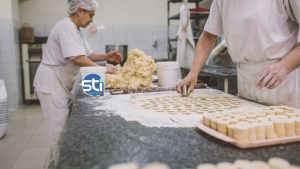
In many operational settings, dry saturated steam is used precisely to complement the work carried out by other cleaning technologies. But it would be reductive to confine it to this supporting role. In sectors such as healthcare, food processing, hospitality and car detailing, steam is often the primary cleaning and sanitisation tool, thanks to its ability to penetrate the micro-pores of surfaces and act in depth using thermal energy alone.
For example, after a scrubber-dryer has completed a pass over a large floor area, steam can be used to clean edges, details and hard-to-reach spots. Similarly, in production environments or workshops, it can be deployed on machine components or irregular surfaces. This approach makes the most of each technology’s strengths, delivering a more thorough cleaning process overall.
A particularly interesting case concerns the relationship between steam and the vacuum cleaner. Suction is essential for removing dust and particulate, but it has no sanitising effect. Steam, conversely, sanitises in depth but does not physically remove the loosened dirt. STI’s COMBY and REVIVE ranges, for instance, combine both functions in a single machine thanks to the Dry-Master technology: steam loosens and sanitises while the integrated vacuum extracts and dries. It is the natural combination of two actions that, performed separately, each tell only half the story.

Less water, less reliance on chemicals
Another fundamental aspect of professional steam cleaning concerns resource consumption. Steam relies primarily on the combined action of temperature and pressure. Field data indicate that, in applications where steam is used as the primary system, water consumption is reduced by 90–95% and chemical expenditure can fall by 80–90%.
To put this in perspective: the water consumption of a steam generator is measured in GRAMS per minute, whereas that of high-pressure water systems is measured in LITRES per minute. These are different approaches, each designed for different needs, but the water saving potential of steam is significant.
Moreover, because heat is so effective at removing grease and residues, steam can substantially reduce the need for large quantities of chemical detergents. STI machines equipped with the exclusive Dose-Master technology (adjustable up to 32 levels) allow the addition of minimal amounts of plant-based detergent when strictly necessary, but in the vast majority of cases steam works effectively using nothing more than ordinary tap water.
For many businesses, this represents a considerable advantage from both an operational and an organisational standpoint. Fewer chemicals to manage often means simpler procedures, fewer residues on surfaces and a more sustainable approach to cleaning. For food producers, wineries, pharmaceutical companies and healthcare facilities — where chemical residues on surfaces are particularly undesirable — steam represents a natural and responsible choice.
An investment that simplifies
One of the most underappreciated aspects of steam is its ability to simplify a company’s equipment requirements. A single STI steam generator, with the appropriate accessories, can cover a remarkably wide range of cleaning and sanitisation operations, reducing the need to multiply equipment, maintenance contracts and consumable stocks. This does not mean that steam should replace every other tool, since every operation has its specific requirements. But for many businesses, discovering just how many applications a single steam generator can cover comes as a welcome surprise in terms of both savings and operational simplification.
A solution for a multitude of sectors
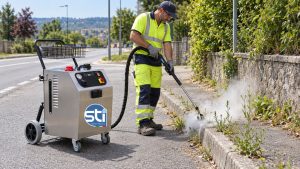
The versatility of steam cleaning becomes even more apparent when one considers the sheer number of settings in which STI Steam Industry steam cleaners can be deployed. The company develops solutions designed to meet highly diverse requirements, from domestic cleaning through to professional, industrial and specialist applications such as the sanitisation of wine barrels and casks.
Professional steam generators are engineered to work on different surfaces, environments and equipment, offering a flexible technology applicable across many sectors. Alongside traditional steam cleaners, the range includes a variety of professional steam cleaners with integrated vacuum extraction — solutions that combine the cleaning power of steam with the immediate removal of loosened dirt through suction. This system streamlines cleaning operations, reducing the number of passes required and making the entire process faster and more effective.
Steam cleaners for the home
The STI domestic range — QV4, QV6, QV7, PRATIKA — is a practical solution for the daily cleaning of household surfaces such as floors, bathrooms, glass, armchairs and sofas, radiators and air conditioning units, mattresses and mosquito nets. Steam dissolves dirt and residues through high temperature, using primarily water and thereby helping to reduce detergent use in everyday home sanitisation routines. These machines operate at pressures of 4.5 to 6 bar with steam output temperatures of up to 100°C, in stainless-steel bodies with continuous refill. Don’t be misled by the word “domestic”: the underlying technology is the same as that of the industrial machines.
Professional steam cleaners
Professional steam cleaners are engineered for working environments that demand high hygiene standards and operational continuity. The range comprises the GAISER 2000 and GAISER 4000 (steam only) and the COMBY 3000, COMBY 3500 and COMBY 4000 (steam plus vacuum extraction), with operating pressures of 8 to 10 bar and steam output temperatures of up to 116°C. The COMBY models are true “steam-and-suction” systems, ideal for hospitality, food service, cleaning companies and healthcare — sectors where dirt recovery is essential.
In these settings, steam enables effective treatment of work surfaces, equipment, upholstery and public-facing areas, providing a powerful solution for cleaning fine details and reaching spots that other methods may struggle to access.
Industrial steam cleaners
The manufacturing sector makes extensive use of industrial steam cleaners, designed to handle more intensive demands and complex environments. STI’s Industrial Line comprises powerful three-phase models: GAISER 6000, GAISER 9000, GAISER 18000, COMBY 6000 and COMBY 9000. The GAISER 18000, with its twin 18 kW boiler and steam output of 480 g/min at 133°C, tackles factories, production lines, conveyor belts, wineries, ships, aircraft and large-scale food processing plants. The COMBY 9000, with its 9 kW boiler, 245 g/min of steam and integrated vacuum, is one of the most complete professional cleaning machines on the market.
All industrial models operate at 10 bar with steam output temperatures from 116°C to 133°C, and feature STI’s exclusive Hydro-Power option for direct mains water connection, enabling truly continuous operation. High temperatures dissolve grease and residues, helping to maintain stringent hygiene standards and simplifying the upkeep of production environments.
Steam cleaners for car detailing
In the automotive sector, steam cleaners for car detailing find their place with STI’s REVIVE Line: REVIVE 4000 and REVIVE 9000. They are used for the thorough sanitisation of vehicle interiors. Steam makes it possible to treat seats, upholstery, floor mats, plastics and delicate surfaces without saturating them with water. The REVIVE 4000, with 10 bar operating pressure and integrated vacuum, removes dirt through three simultaneous actions: thermal (steam temperature), chemical (optional plant-based detergent via Dose Master) and mechanical (steam jet pressure), leaving fabrics dry and completely residue-free.
Steam cleaners for pest control
One of the most specialist applications concerns pest control. The steam cleaner for bed bug disinfestation harnesses high-temperature steam to target parasites with precision. STI’s BugsBuster uses a unique technology: superheated steam reaching 220°C. This temperature enables the thermal elimination of bed bugs, mites, fleas and ticks without any chemical products.
This technology enables the treatment of mattresses, fabrics, furnishings and hard-to-reach crevices, providing an effective solution for professional pest management activities.

STI’s exclusive technologies: why simply “producing steam” is not enough
The difference between a generic steam generator and an STI Steam Industry machine lies in the proprietary technologies that transform a good generator into a complete cleaning system:
- Non-Stop System: continuous boiler supply, zero interruptions during extended cleaning sessions.
- Flow-Master: precise, real-time adjustment of steam flow, from a gentle stream for delicate fabrics to full power for industrial degreasing.
- Dose-Master (up to 32 levels): electronic management of the detergent-to-steam ratio. Zero waste, chemical-free operation as standard.
- Hydro-Jet: controlled flows of wet steam for rinsing and enhanced cleaning.
- Dry-Master: integrated vacuum and drying — surfaces cleaned, sanitised and dried in a single pass.
- Hydro-Power: direct mains water connection for unlimited operation.
- Intelli-Boiler: intelligent safety system with automatic shutdown in the event of an anomaly.
- Easy-Service: removable heating elements to simplify maintenance and reduce service time.
- Steel-Master: full stainless-steel body construction across all professional and industrial models.
These technologies make STI machines extraordinarily flexible tools, capable of adapting to vastly different operational demands — from the finest detail work to continuous-cycle industrial cleaning.
Discover the STI Steam Industry range
Steam cleaning is an extremely versatile solution across many sectors, but choosing the right technology often requires a careful assessment of operational needs. That is why STI Steam Industry draws on its extensive experience in developing steam cleaners designed for a wide range of applications: from the home to professional environments, and from industrial settings to car detailing and pest control.
If you would like to explore the potential of steam cleaning or identify the machine best suited to your business, you can contact the STI Steam Industry team for further information on products and available solutions.
The company is also actively seeking new commercial partners: if you work in the distribution of professional cleaning equipment, joining the STI Steam Industry distributor network could be an excellent opportunity to broaden your offering with innovative and reliable steam technologies.
FAQ on professional steam cleaning
Professional steam cleaning is a system that uses dry saturated steam at high temperature and pressure (up to 10 bar with steam output temperatures reaching 133°C in STI’s industrial machines) to remove dirt, grease and residues from surfaces. The heat of the steam dissolves many types of soiling using primarily water, delivering significant water savings and a substantial reduction in chemical usage.
Steam cleaning machines find application in numerous sectors: the home, food manufacturing, hospitality, transport, automotive, cleaning companies, healthcare environments and general industry. In addition, they are used in wineries, sports centres, schools, cinemas and theatres, pest control, retail, professional glass cleaning and special
applications such as conveyor belt cleaning and chewing gum removal. Over 17 major sectors are documented.
Steam is, first and foremost, an outstanding complement to existing technologies, capable of tackling tasks that other systems cannot easily reach. In many contexts, however, it also proves to be an extremely effective standalone tool: a single STI steam generator with the appropriate accessories can cover a surprising range of operations. Sweepers, scrubber dryers, vacuum cleaners and pressure washers remain valuable tools in their respective fields. Steam works alongside them, adding the sanitising action that suction or mechanical washing alone cannot deliver. STI’s COMBY and REVIVE models, which integrate steam and vacuum extraction in a single machine, represent the ideal synthesis of these two functions.
STI Steam Industry offers five lines: Domestic (QV4, QV6, QV7, PRATIKA), Professional (GAISER 2000–4000, COMBY 3000–4000), Industrial (GAISER 6000–18000, COMBY 6000–9000), Car Detailing (REVIVE 4000, REVIVE 9000) and the Pest Control line featuring the BugsBuster with superheated steam at 220°C. The STI team can help you identify the ideal configuration for your specific requirements.