Ambulance sanitization has always been a central and vitally important topic in the healthcare sector. Ensuring hygiene and safety inside emergency vehicles is not just a legal requirement, but an essential necessity to protect the health of patients and healthcare workers.
In recent years, attention to ambulance cleaning practices has grown considerably, especially due to pandemic events that have highlighted the critical importance of proper hygienic management of vehicles intended for medical assistance. Traditional sanitization procedures based primarily on the use of chemical substances have shown some significant limitations, related to both effectiveness and safety for operators and the environment.
Among the most effective alternative methods, dry saturated steam clearly stands out as an innovative solution that guarantees a perfect combination of hygiene, safety, and sustainability. If you’re curious to discover how steam can revolutionize emergency vehicle sanitization and the main regulations governing this delicate area, you’re definitely in the right place!
Why is ambulance sanitization of vital importance?
Ambulance disinfection is essential to prevent the spread of bacteria, viruses, and other dangerous pathogens, which could easily proliferate in enclosed spaces frequented by vulnerable people. In an emergency vehicle, the probability of biological contamination is high, given the frequency and severity of interventions carried out daily.
An inadequately sanitized ambulance can quickly become a vehicle for infections, putting already fragile patients at serious risk, as well as the operators themselves. Therefore, a regular and thorough ambulance cleaning procedure is not just a regulatory obligation, but a moral and professional duty that every healthcare facility should strictly respect.
Ambulance sanitization regulations: what the law says
The regulations governing ambulance sanitization are precise and rigorous. According to current directives, each ambulance must be sanitized with regular frequency, using methods and products approved by the Ministry of Health, in order to guarantee the highest hygienic-sanitary standard.
The law requires the registration of cleaning and sanitization interventions, with detailed documentation attesting to the effectiveness of the treatments carried out. The regulations also provide specific protocols that include the frequency of operations, application methods, and devices that must be used to ensure a result that complies with the highest safety standards.
In this well-defined regulatory framework, the use of dry saturated steam fits perfectly, fully satisfying all the effectiveness and safety requirements for the correct hygienic-sanitary management of emergency vehicles.
The advantages of dry saturated steam in ambulance disinfection
When talking about sanitization, people often immediately think of traditional chemical products. However, these substances present several disadvantages. Chemical products can leave toxic residues, which represent a potential risk for both operators and patients, and, in addition, some pathogens can develop resistance to specific chemical disinfectants, making the ambulance sanitization process less effective.
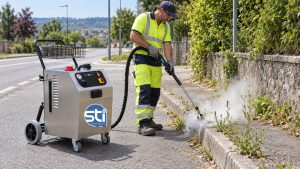
The use of dry saturated steam for ambulance disinfection presents numerous advantages compared to traditional methods. First of all, steam can reach high temperatures that allow immediate and complete elimination of viruses, bacteria, and fungi without the use of aggressive chemical substances.
Unlike chemical detergents, which can leave potentially harmful residues for patients or operators, steam acts effectively without producing any dangerous residue. This makes cleaning with steam an ecological and safe choice, respectful of both human health and the environment.
Moreover, dry saturated steam penetrates deeply even into the most difficult surfaces, such as joints, corners, upholstery, and medical equipment, ensuring uniform and deep sanitization. This result is hardly achievable with traditional cleaning methods, especially if used hastily or inadequately.
Reduction of vehicle downtime
A further benefit not to be underestimated when talking about using steam in ambulance cleaning concerns the drastic reduction of vehicle downtime. Unlike chemical products that often require prolonged drying times and intense ventilation to eliminate odors and toxic residues, steam evaporates quickly. This allows rapid reactivation of the vehicle, which is fundamental especially in emergency services where timeliness and availability of vehicles are among the main focuses.

Recommended procedure for sanitizing ambulances with steam
To ensure the effectiveness of ambulance cleaning using steam, it is essential to follow some operational guidelines that maximize the hygienic result.
First, it is necessary to clear the vehicle of any mobile objects and easily removable accessories. Once the ambulance is prepared, proceed with the application of steam starting from the highest surfaces towards the lowest ones, in order to optimize the distribution of heat and ensure complete sanitization.
It is important to pay particular attention to all high contamination risk areas, such as stretchers, seats, floors, medical equipment, and door handles. After treating all surfaces, it is advisable to leave doors and windows open to facilitate the rapid drying of the vehicle and to successfully complete the sanitization process.
Finally, it is appropriate to document the intervention carried out, noting the date, time, and method used, so as to correctly comply with the provisions of the current regulations on ambulance sanitization.
STI Steam Industry: professional solutions for steam sanitization
In the landscape of professional steam cleaners dedicated to ambulance disinfection, STI Steam Industry stands out for the high quality and reliability of its products. The STI Professional Line is specifically designed to effectively respond to the needs of the healthcare sector and, in particular, to the deep sanitization of emergency vehicles such as ambulances.
Among the recommended models is the Gaiser 4000, a powerful, versatile, and easy-to-use steam generator ideal for the healthcare sector. The Gaiser 4000 produces dry saturated steam at high temperatures, ensuring a very high level of disinfection, guaranteed by the ability to reach and maintain the optimal temperature necessary to completely eliminate viruses, bacteria, and other pathogens.
Thanks to its advanced technical features, such as high autonomy due to the continuous and automatic water refill system in the boiler, steam jet regulation, fast heating system, and operational ergonomics, the Gaiser 4000 represents an excellent choice to optimize the process of emergency vehicle sanitization. STI Steam Industry also offers continuous support and specific training to operators, ensuring that every intervention is carried out correctly and in compliance with current regulations.
It can therefore be stated with certainty that the choice of sanitization with dry saturated steam represents a significant step forward in the hygienic management of ambulances, capable of combining safety, effectiveness, and respect for the environment. STI Steam Industry is the ideal partner for all healthcare facilities that wish to raise their standards of hygiene and safety, relying on the most advanced and reliable technology available on the market.
If you need more details, don’t hesitate to contact us: we are always happy to answer all your questions! And, if you are interested in joining our team as a distributor, you can find all the necessary information on our dedicated page!