The sanitisation of brewing equipment is one of the most critical and strategic aspects of running a modern brewery or craft brewing operation. It’s not simply about keeping equipment clean — it’s about ensuring consistent quality, food safety and respect for the product at every stage, from production right through to the glass. This is why brewery sanitisation is now regarded as a genuine quality control practice.
Ineffective sanitisation can compromise all the work done upstream: even the finest recipe can be let down by invisible contamination that alters the beer’s aroma, taste and stability, causing sensory defects commonly known as “off-flavours” and drastically reducing the product’s shelf life.
Why Brewery Equipment Sanitisation Matters So Much
Within a brewery, beer comes into contact with numerous surfaces: fermenters, pipework, valves, fillers, tanks and, subsequently, the draught beer dispense system. All of these represent potential critical points from a hygiene perspective.
Brewery equipment sanitisation aims to significantly reduce the microbial load on these surfaces, preventing the proliferation of bacteria, wild yeasts and moulds. Even minimal contamination can generate sensory defects, product instability or, in the worst cases, render the beer non-compliant with food safety standards. Proper sanitisation therefore means protecting the brewer’s craft and preserving the beer’s identity.
When to Carry Out Sanitisation in Brewing Operations
The frequency of brewery equipment sanitisation varies depending on the type of equipment and intensity of use. In a brewery, sanitisation should accompany all key production stages — particularly between brews, after maintenance work or following extended downtime.
Even minimal contamination can generate sensory defects (such as acetic, phenolic or solvent-like notes), product instability or, in the worst cases, render the beer non compliant with food safety standards. Proper sanitisation therefore means protecting the brewer’s craft and preserving the beer’s identity.
Traditional Beer Sanitisation Methods
For years, brewery sanitisation has relied primarily on chemical detergents and sanitisers (such as peracetic acid solutions, iodophors or quaternary ammonium compounds). These products, when used correctly, can be effective, but they require precise contact times, thorough rinsing and careful handling to avoid residues on surfaces. Furthermore, the environmental impact and equipment downtime often represent limitations, particularly for craft breweries working on tight production cycles. These factors have prompted many in the industry to seek faster, safer and more sustainable alternatives.
Brewery Equipment Sanitisation with Steam: A Modern and Effective Approach
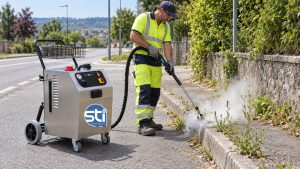
Steam sanitisation is based on the use of high-temperature dry saturated steam, capable of removing dirt and eliminating microorganisms without the use of harsh chemicals. Steam acts in depth thanks to the combination of temperature, pressure and penetration capability, proving particularly effective against biofilms and residues that are difficult to remove with traditional methods. This approach delivers safe, effective, rapid and repeatable sanitisation — a fundamental requirement for those working in the food sector, catering and brewing industries.
Steam and Sanitisation: Real Benefits for Breweries
Compared with traditional methods, steam offers tangible, measurable benefits for those running a brewery:
- Microbicidal efficacy without chemical residues: High-temperature dry saturated steam effectively reduces microbial load, eliminating the risk of leaving residues that could contaminate the product or alter its organoleptic characteristics.
- Dramatically reduced intervention times: Steam sanitisation operations require significantly less time than traditional chemical protocols, reducing production downtime.
- Greater safety for operators: Eliminating chemical detergents and sanitisers reduces the risk of exposure to harsh substances during cleaning operations.
- Environmental sustainability: Steam uses only water, eliminating the disposal of chemical products and reducing the overall environmental impact of the production process.
- Standardisation and repeatability: Steam sanitisation enables process standardisation and allows intervention on complex components, such as pipework and fittings, that are difficult to reach with other systems.

Which Equipment Can Be Sanitised with Steam
One of the key strengths of steam sanitisation is its remarkable versatility. Within a brewery, steam can be used on numerous pieces of equipment that come into direct or indirect contact with beer, helping to maintain high hygiene standards throughout the entire production chain.
Steam treatment is particularly effective on fermenters, tanks and transfer lines, where organic residues and microorganisms can accumulate over time if not properly removed. Likewise, steam can be used on bottling lines, treating fillers, conveyors and critical process components without the use of harsh chemicals and with reduced equipment downtime.
Steam generators also find application on casks and barrels, increasingly common in breweries experimenting with special ageing and maturation processes. In these cases, steam enables effective sanitisation of internal surfaces, limiting the risk of contamination whilst preserving the beer’s sensory characteristics.
As an excellent method for stainless steel cleaning, steam also proves particularly well-suited for draught lines, taps and dispensing heads — points where product residues and microorganisms tend to accumulate more readily. Proper draught beer system sanitisation ensures the original taste of the beer remains intact, delivering to the end consumer a product that meets both the brewer’s expectations and the required hygiene standards.
Steam Sanitisation Across Different Brewing Contexts
Steam sanitisation of brewing equipment adapts effectively to very different production and service contexts. In craft breweries, it represents a flexible solution for managing small batches with close attention to quality and process repeatability, enabling head brewers to maintain full control over hygiene standards without excessive investment in chemicals and their disposal. In industrial breweries, steam enables optimisation of sanitisation cycles, significantly reducing line downtime and improving overall operational efficiency. The ability to intervene quickly between production runs translates into a tangible competitive advantage.
Even in pubs and venues with draught beer dispense systems, steam sanitisation offers a real benefit, enabling improved line hygiene without lengthy service interruptions. This ability to adapt to diverse requirements makes steam a versatile solution suited to the entire brewing chain — from production to dispense, through to ageing and bottling.
STI Steam Industry Solutions for Brewery Sanitisation
The steam cleaners from STI Steam Industry are designed to meet the demands of the food industry and brewing sector, where reliability, operational continuity and high hygiene standards are non-negotiable requirements.
Within large industrial breweries or well-established craft operations, industrial steam cleaners enable effective sanitisation of production machinery, bottling lines and stainless steel surfaces. Models such as Gaiser 6000, Gaiser 9000, Gaiser 18000, Comby 6000 and Comby 9000 find application here, engineered to deliver high performance even during intensive work cycles.

For pubs, bars and small breweries, the more compact models from the professional line also represent an effective solution for sanitising dispense systems, offering operational flexibility and ease of use.
In both cases, the high performance of steam enables effective management of brewery equipment sanitisation, guaranteeing tangible, measurable results throughout the entire chain. Furthermore, the same equipment allows cleaning operations to extend to other areas of the brewery or venue, such as toilets, glass surfaces and floors, optimising time and resources.
If you’re looking to improve cleaning and sanitisation in your brewery, the steam cleaners from STI Steam Industry represent a professional, effective and sustainable solution. Contact our team with no obligation to receive further information or a personalised quote, or visit the section dedicated to distribution opportunities if you’re interested in joining the STI Steam Industry network!
FAQ on Brewery Equipment Sanitisation
The frequency of brewing equipment sanitisation depends on the type of equipment and intensity of use. In a brewery, sanitisation should be carried out regularly between production cycles, as well as after maintenance work or extended downtime. For draught beer dispense systems, it is advisable to sanitise the lines periodically and whenever a keg is changed, to prevent the build-up of residues and contamination that can alter the beer’s taste.
Yes, when carried out with professional equipment, steam sanitisation is safe and extremely effective. Steam works without the use of harsh chemicals and leaves no residues on surfaces in contact with the product. This makes it particularly suited to tap cleaning, production machinery and all components of a brewery that require
high hygiene standards.
Sì, uno dei principali vantaggi del vapore è la sua versatilità. Con i pulitori a vapore è Yes, one of the key advantages of steam is its versatility. With steam cleaners, you can sanitise both production and bottling machinery as well as dispense lines and taps. This enables a single approach to sanitisation, ensuring consistency, safety and consistent quality from brewery to glass.