Canteen sanitisation is a critical activity for ensuring safe, hygienic environments that comply with health regulations wherever food is prepared and consumed. Whether in a workplace canteen or a school dining hall, hygiene management must be consistent, thorough and structured to prevent contamination, bacterial proliferation and health risks for workers, pupils and staff.
Canteens are environments characterised by a high throughput of people and continuous contact with food, utensils and surfaces. Today, among the most effective technologies for achieving deep, reliable sanitisation, high-temperature dry saturated steam stands out for its ability to remove dirt, grease and micro-organisms from a wide variety of surfaces whilst substantially reducing the need for chemical detergents.
Why is canteen sanitisation necessary?
Proper canteen sanitisation — whether in schools or workplaces — is not merely good hygiene practice but an essential requirement for food safety. Canteens bring together a number of factors that can promote contamination: food residues, surfaces in direct contact with meals, shared utensils and a constant flow of people.
Canteen cleaning must therefore be organised so as to prevent the proliferation of bacteria, viruses and moulds, which can develop particularly in food preparation areas and on the most heavily used surfaces. Effective workplace canteen sanitisation protects employee health and helps maintain high standards of quality and safety within the organisation. Similarly, school canteen sanitisation assumes an even more sensitive role because it involves children and young people — groups particularly vulnerable to the risks associated with food hygiene.
Beyond health and safety, proper canteen cleaning also affects the perceived quality of the service. Clean, well-maintained environments inspire confidence among users and help create a more pleasant and reassuring setting for mealtimes.
Regulations and protocols for canteen sanitisation
Canteen sanitisation activities are governed by specific regulations relating to food safety and HACCP protocols (Hazard Analysis and Critical Control Points). This system provides for the monitoring of critical points within food preparation processes, with the aim of preventing contamination and ensuring food safety. These protocols also encompass the cleaning procedures for workplace and school canteens, which must be documented, scheduled and carried out on a regular basis. Work surfaces, kitchen equipment and dining areas must all undergo cleaning and sanitisation at defined intervals.
School or workplace canteen sanitisation must therefore include periodic inspections, records of completed operations and the use of effective, safe methods for eliminating micro organisms and organic residues. In this context, steam cleaners represent a particularly effective solution, as they enable deep sanitisation across many different types of surface, harnessing the full power of steam.

Canteen areas that require the greatest attention
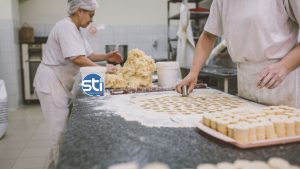
Canteen sanitisation does not concern a single area but encompasses the entire facility. Kitchens, dining halls, bathrooms and service areas all require specific procedures to ensure thorough hygiene. In canteen commercial kitchens, there are numerous surfaces in direct contact with food: stainless-steel worktops, chopping boards, utensils, ovens and professional equipment. Here, cleaning must be particularly meticulous, because even minor contamination can compromise food safety. Cold rooms and storage areas also require regular sanitisation, given the importance of preventing mould growth or the build-up of dirt that could contaminate stored ingredients.
The dining hall itself, often used by dozens or even hundreds of people every day, represents another critical point. Tables, chairs, counters, glazing and vending machines must be subjected to frequent sanitisation to remove food residues and reduce the presence of bacteria on high-touch surfaces. Finally, floors, walls, extractor hoods and ventilation systems must be included in school or workplace canteen sanitisation programmes, as they can accumulate grease, dust and organic particles over time.
How is canteen sanitisation carried out properly using steam?
Canteen cleaning with a steam cleaner follows a precise procedure that delivers effective results quickly and safely. The first step involves removing the most visible residues — leftover food and surface dirt — to prepare surfaces for treatment.
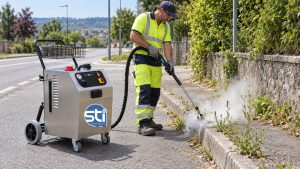
High-temperature steam is then applied directly to worktops, equipment, tiles and dining-hall surfaces. The steam dissolves grease, encrustations and stubborn dirt, penetrating even the hardest-to-reach areas and ensuring a deep clean. During this phase, canteen sanitisation occurs naturally thanks to the elevated temperature, which significantly reduces the presence of bacteria and micro-organisms without the use of chemical products. In systems equipped with vacuum extraction, the loosened dirt is removed immediately, leaving surfaces clean and dry.
Finally, a brief drying and airing phase is all that is needed to complete the operation, making the spaces quickly available for use again. This approach makes steam a particularly effective solution for canteen cleaning, especially in settings where rapid turnaround is essential without compromising the service.
The advantages of steam sanitisation in canteens
In recent years, dry saturated steam technology has established itself as one of the most effective solutions for canteen sanitisation. Thanks to its high temperatures, steam alone can significantly reduce bacterial loads and sanitise surfaces. This is particularly important in school canteens, where sanitisation must guarantee maximum safety for children and young people and minimise the risk of chemical residues on surfaces that come into contact with food.
Another advantage of steam generators is the speed of intervention. In canteens, cleaning operations must often be completed within tight time windows so as not to interfere with meal preparation and service. Steam delivers effective sanitisation in less time than traditional canteen cleaning methods, making it possible to maintain high hygiene standards even in fast-paced working environments.
Steam is also particularly effective at removing the type of soiling typically found in professional kitchens. Grease, food residues and encrustations that build up on equipment, extractor hoods, tiles and work surfaces can be tackled more easily through the combined action of temperature and pressure. A further strength is its remarkable flexibility: steam can be applied to the many different surfaces found in kitchens and dining halls — from worktops to floors, from equipment to tables — demonstrating the extraordinary versatility of steam in a professional setting. Finally, the use of professional steam systems makes workplace canteen cleaning operations more efficient and sustainable, helping to reduce water and detergent consumption whilst optimising intervention times.

Professional solutions for canteen sanitisation
To achieve genuinely effective results in canteen sanitisation, it is essential to use professional equipment designed for food-handling environments. The professional steam cleaners from STI Steam Industry, developed for the food service sector, such as the GAISER 2000 and 4000, enable intervention on every canteen surface to the highest hygiene standards. Thanks to the combination of elevated temperature and controlled pressure, steam penetrates surfaces, dissolving grease, removing food residues and eliminating micro organisms effectively.
An additional benefit comes from the steam cleaners with integrated vacuum extraction, such as the COMBY 3000, 3500 and 4000 or the QV7 PRO, which combine the cleaning action of steam with the immediate suction of loosened dirt. This technology enables the rapid removal of residues, liquids and impurities from treated surfaces, leaving them clean and dry. In settings such as canteens, where turnaround times must be kept to a minimum, steam-and-vacuum machines are particularly effective because they allow cleaning and sanitisation to be carried out in a single operation, improving the efficiency of canteen cleaning activities and reducing downtime in work areas.
If you would like to improve your sanitisation operations and make your workplace or school canteen cleaning more efficient, steam technologies offer a professional and reliable solution. STI Steam Industry steam generators enable you to tackle every cleaning operation effectively, ensuring high standards of hygiene and safety in kitchens and dining halls.
For further information, to request a consultation or a personalised quotation, please contact our team. If you are interested in developing new business opportunities, you can visit the page dedicated to distribution opportunities and find out how to become part of the STI Steam Industry partner network.
FAQs about cleaning school and company canteens
Canteen sanitisation should be performed daily in the most heavily used areas, including tables, chairs, worktops, counters, utensils, kitchen equipment and door handles. More thorough canteen cleaning operations should be scheduled at regular intervals in accordance with HACCP protocols.
For proper canteen sanitisation, all surfaces must be cleaned in compliance with HACCP regulations. High-temperature dry saturated steam enables the removal of dirt and bacteria without leaving chemical residues behind.
Inadequate canteen sanitisation can encourage the proliferation of bacteria and food contamination, increasing health risks for users and staff and jeopardising compliance with hygiene and food-safety regulations.